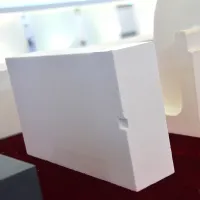
For coke producers facing rising operational costs and aging furnace infrastructure, the choice of refractory material can make or break efficiency gains. Traditional silicon bricks often suffer from high porosity (up to 18%), leading to thermal shock damage, faster degradation, and inconsistent heat transfer — all of which reduce coke oven life and increase downtime.
Our high-density low-porosity silicon brick (density: 2.7–2.8 g/cm³ vs. 2.4–2.6 g/cm³ in standard types) is engineered using advanced sintering techniques that minimize pore volume to just 6–8%. This isn’t just a minor improvement — it translates into real-world benefits:
| Property | Standard Silicon Brick | Our High-Density Version |
|---|---|---|
| Porosity (%) | 16–18% | 6–8% |
| Thermal Conductivity (W/m·K) | 12–14 | 18–22 |
| Hot Compressive Strength (MPa @ 1400°C) | 15–20 | 30–35 |
These metrics aren’t just numbers — they mean less energy loss, more stable temperatures, and fewer maintenance cycles. In one case study from a Chinese steel plant, switching to our bricks reduced average coking time by 1.5 hours per cycle while extending oven life from 12 to 18 years.
Many buyers focus only on upfront cost — but what about long-term value? Here’s how this upgrade changes the game:
One European client noted: “We saw a 15% drop in monthly repair costs within six months after switching. That alone paid back the initial investment.”
Ready to transform your coke oven performance?
Get Your Free Technical Comparison ReportWhether you’re optimizing an existing facility or planning a new build, choosing high-density low-porosity silicon brick means smarter operations, lower risk, and stronger margins. It’s not just a product change — it’s a strategic shift toward sustainable competitiveness.


 167
|
167
|
 zero-expansion silicon bricks
environmental benefits
sustainable building materials
zero-expansion silicon bricks
environmental benefits
sustainable building materials
 137
|
Magnesia Zirconia Bricks
Industrial Refractory Materials
137
|
Magnesia Zirconia Bricks
Industrial Refractory Materials
 166
|
Silica bricks for glass kilns
SiO₂ content in silica bricks
High - temperature resistant silica bricks
Glass kiln materials
Siliceous refractory materials
166
|
Silica bricks for glass kilns
SiO₂ content in silica bricks
High - temperature resistant silica bricks
Glass kiln materials
Siliceous refractory materials
 404
|
High - density silica bricks
Low - porosity silica bricks
Coke oven refractories
Coking efficiency improvement
Industrial refractory solutions
404
|
High - density silica bricks
Low - porosity silica bricks
Coke oven refractories
Coking efficiency improvement
Industrial refractory solutions
 479
|
Silica Brick
Coking Process
Carbon Production
Industrial Materials
479
|
Silica Brick
Coking Process
Carbon Production
Industrial Materials
.jpg?x-oss-process=image/resize,m_fill,h_200,w_200/format,webp)
.jpg?x-oss-process=image/resize,m_fill,h_200,w_200/format,webp)

.jpg?x-oss-process=image/resize,m_fill,h_200,w_200/format,webp)
.jpg?x-oss-process=image/resize,m_fill,h_200,w_200/format,webp)