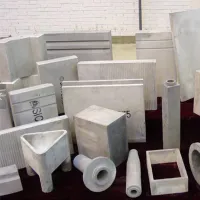
As global demand for high-quality coke increases, the pressure on coking plants to improve efficiency and reduce downtime has never been greater. Traditional refractory materials are often pushed beyond their limits—leading to premature failure, higher maintenance costs, and inconsistent product quality. That’s where high-density low-porosity silicon brick comes in—a technically advanced solution engineered for today’s most demanding coke oven environments.
What sets these bricks apart isn’t just marketing—it’s measurable performance. Standard silicon bricks typically have a porosity of 18–22% and a density around 2.3 g/cm³. In contrast, our high-performance silicon bricks meet strict specifications:
| Property | Standard Silicon Brick | High-Density Low-Porosity Brick |
|---|---|---|
| Porosity (%) | 18–22% | <16% |
| Density (g/cm³) | ~2.30 | >2.38 |
| Thermal Conductivity (W/m·K) | ~12 | >15 |
| Hot Strength (MPa @ 1400°C) | ~30 | >45 |
These improvements translate directly into real-world benefits: faster heat transfer, enhanced structural integrity under thermal cycling, and significantly extended service life—often by up to 30% compared to conventional options.
A major steel plant in China reported a reduction in coking time by 4.5 hours per cycle after switching to high-density silicon bricks. Meanwhile, a European coke producer saw a 27% decrease in refractory replacement frequency over 18 months—an estimated savings of $120,000 annually in labor and material costs.
Our customers aren't just buying bricks—they're investing in a reliable, long-term solution that supports consistent coke quality, reduces energy consumption, and improves overall operational stability. This is especially critical in regions like the Middle East and Southeast Asia, where extreme temperatures and high throughput demand maximum durability.
Pro Tip: Not all coke ovens are created equal. If your furnace operates above 1350°C or experiences frequent thermal shocks, this type of brick may be exactly what you need to avoid costly breakdowns.
Whether you’re managing an aging facility or planning a new build, choosing the right refractory material can make the difference between marginal performance and industry-leading results.
Get a free technical evaluation tailored to your specific operating conditions—including temperature profiles, load requirements, and expected lifespan goals.
Download Our Free Refractory Selection Guide
.jpg?x-oss-process=image/resize,h_600,m_lfit/format,webp)
 476
|
476
|
 high-density silica bricks for coke ovens
low-pore rate refractory materials
enhanced thermal conductivity in silica bricks
high-density silica bricks for coke ovens
low-pore rate refractory materials
enhanced thermal conductivity in silica bricks
 273
|
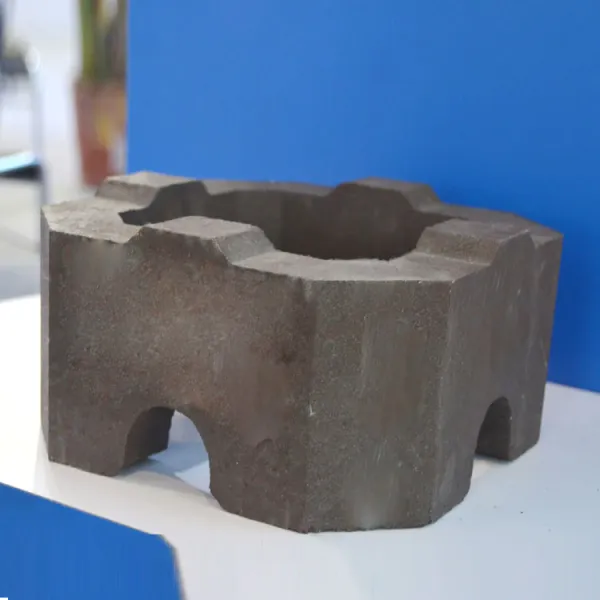
Electric fusion magnesium bricks
high-temperature refractory materials
alkali slag resistance
273
|
Electric fusion magnesium bricks
high-temperature refractory materials
alkali slag resistance
.jpg?x-oss-process=image/resize,h_600,m_lfit/format,webp) 89
|
high density low porosity silicon bricks for coke oven efficiency
refractory materials for coke ovens
enhance service life of coke ovens with silicon bricks
89
|
high density low porosity silicon bricks for coke oven efficiency
refractory materials for coke ovens
enhance service life of coke ovens with silicon bricks
.jpg?x-oss-process=image/resize,h_600,m_lfit/format,webp) 272
|
high-density silica brick
low-porosity refractory materials
coke oven performance enhancement
272
|
high-density silica brick
low-porosity refractory materials
coke oven performance enhancement
 336
|
Zirconia-mullite bricks
Refractory materials for the glass industry
Guide to refractory material selection
Thermal shock stability
Corrosion resistance
336
|
Zirconia-mullite bricks
Refractory materials for the glass industry
Guide to refractory material selection
Thermal shock stability
Corrosion resistance


.jpg?x-oss-process=image/resize,m_fill,h_200,w_200/format,webp)