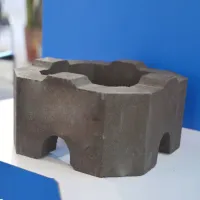
In today’s competitive coke production environment, even a 5% improvement in thermal efficiency or furnace lifespan can translate into millions of dollars in savings over time. That’s why leading coke producers are turning to high-density, low-porosity silicon bricks — not just as an upgrade, but as a strategic investment.
Unlike conventional silicon bricks that often fall short under extreme heat cycles, our high-density low-porosity silicon bricks meet strict technical benchmarks:
This isn’t just about numbers—it means faster heat transfer, reduced thermal stress, and significantly improved structural integrity during repeated heating-cooling cycles.
| Performance Metric | Standard Silicon Brick | High-Density Low-Porosity Brick |
|---|---|---|
| Avg. Service Life (Years) | 4–5 | 7–9 |
| Lay Time Reduction | N/A | ~12–15% |
| Energy Consumption per Ton of Coke | ~220 kWh | ~185 kWh |
One client in China reported a 30% reduction in maintenance downtime after switching to this material—without any changes to their existing furnace design. Another in the Middle East saw consistent temperature control across all chambers, improving coke quality uniformity by 18%.
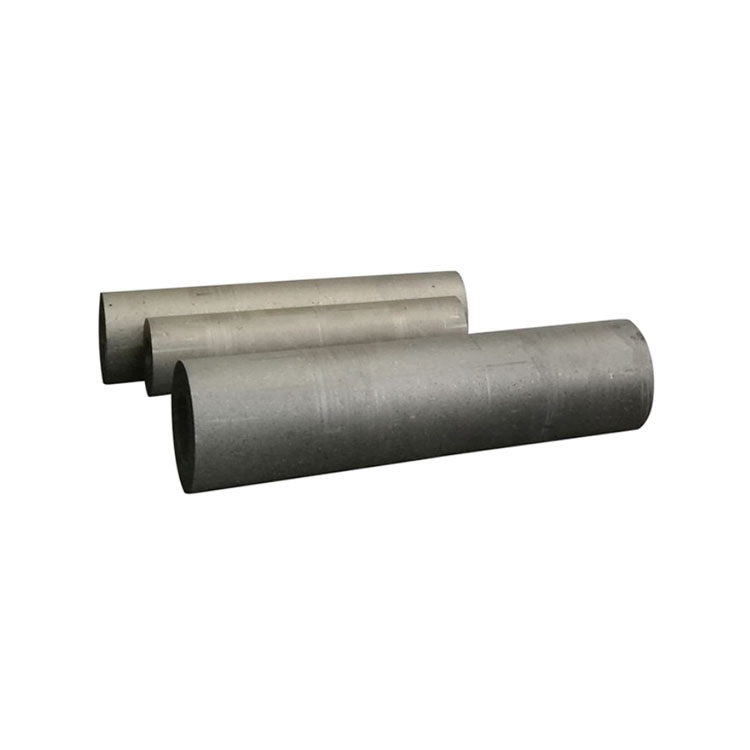
The key lies in consistency—not just in raw specs, but in how well the brick performs over thousands of hours at operating temperatures above 1300°C. Our factory employs rigorous QA protocols, including automated porosity testing and X-ray diffraction analysis, ensuring every batch meets the density >2.38 g/cm³ and porosity <16% standards.
You don’t need to overhaul your entire operation—just replace critical zones like regenerator walls, flue channels, or oven crown areas where thermal shock is most severe.
“We didn’t expect such a dramatic drop in energy usage—but once we installed the new bricks, our annual electricity cost dropped by over $250K.”
- Zhang Wei, Plant Manager, Shandong Coking Co.
If you're still using older refractory materials, ask yourself: Is your current setup holding back productivity? Are you missing out on long-term savings from better thermal management?

 495
|
495
|
 High-Temperature Magnesia-Chromite Bricks
High-Performance Refractory Materials
Superior Thermal Cycling Performance
High-Temperature Magnesia-Chromite Bricks
High-Performance Refractory Materials
Superior Thermal Cycling Performance
.jpg?x-oss-process=image/resize,h_600,m_lfit/format,webp) 56
|
fused silica bricks
high purity refractory materials
furnace performance enhancement with fused silica
56
|
fused silica bricks
high purity refractory materials
furnace performance enhancement with fused silica
 247
|
refractory materials
synthetic magnesium olivine bricks
market trends
fire-resistant materials
industrial applications
247
|
refractory materials
synthetic magnesium olivine bricks
market trends
fire-resistant materials
industrial applications
 280
|
high density silica brick
low porosity refractory
coke oven耐火砖
coking industry refractory solutions
refractory brick performance improvement
280
|
high density silica brick
low porosity refractory
coke oven耐火砖
coking industry refractory solutions
refractory brick performance improvement
 229
|
["magnesium carbon brick technology"
"refractory material innovation"
"industrial furnace refractories"
"magnesium carbon brick production"
"advanced firing techniques"]
229
|
["magnesium carbon brick technology"
"refractory material innovation"
"industrial furnace refractories"
"magnesium carbon brick production"
"advanced firing techniques"]


.jpg?x-oss-process=image/resize,m_fill,h_200,w_200/format,webp)
.jpg?x-oss-process=image/resize,m_fill,h_200,w_200/format,webp)

.jpg?x-oss-process=image/resize,m_fill,h_200,w_200/format,webp)