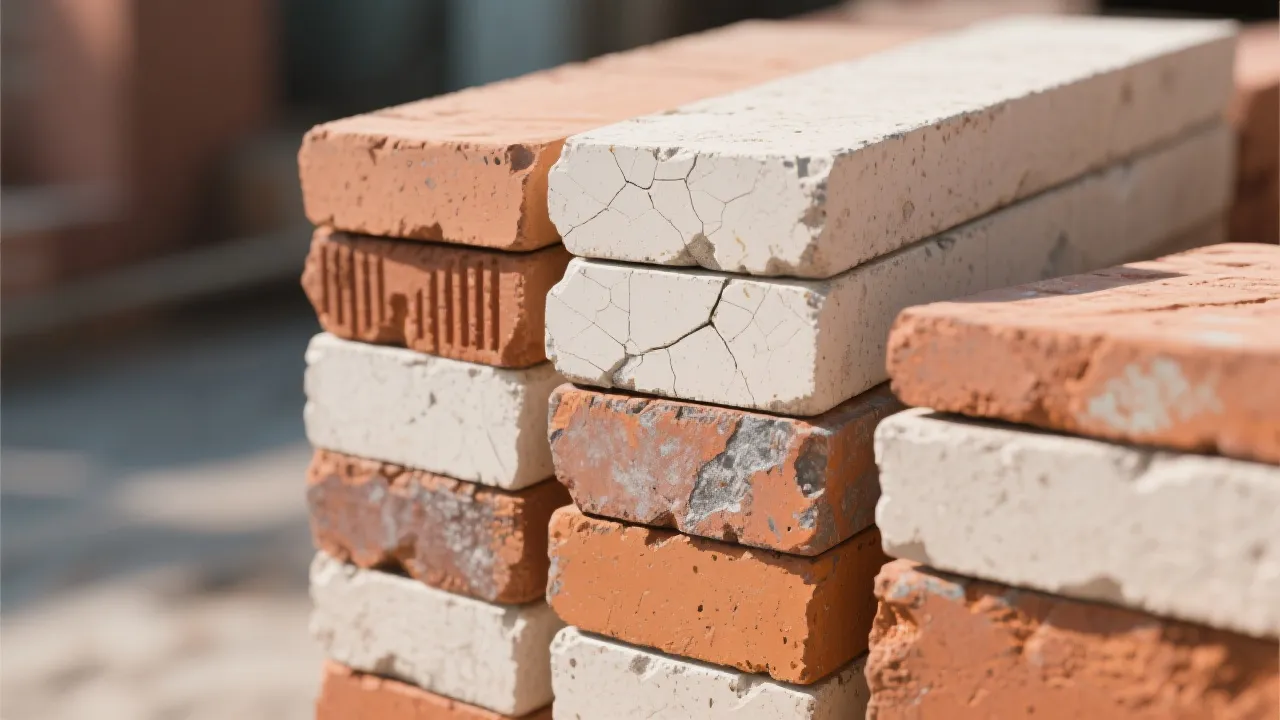
In high-temperature industrial processes—from steelmaking to glass production—equipment wear remains one of the biggest hidden costs. Traditional refractory materials fail under thermal stress, leading to frequent replacements, inconsistent product quality, and unplanned downtime. But what if you could extend furnace life by up to 40% while reducing maintenance costs? The answer lies in advanced zirconia bricks.
Modern zirconia bricks are engineered using a precise blend of α-Al₂O₃ (alpha alumina), partially stabilized zirconia (PSZ), and pre-fired zirconia-alumina熟料 (zirconia-alumina calcine). This formulation delivers unmatched durability:
| Property | Typical Value | Impact on Operations |
|---|---|---|
| Max Service Temp | 1750°C+ | Enables continuous operation at peak efficiency |
| Thermal Shock Resistance | ≥ 800°C rapid cooling cycles | Minimizes cracking during temperature swings |
| Reheat Shrinkage | < 0.5% | Maintains dimensional stability for consistent output |
| Chemical Stability | Resists alkali vapor & slag attack | Prevents corrosion from harsh process environments |
These properties translate directly into operational gains: fewer shutdowns, higher throughput, and improved product consistency—key factors for any manufacturer aiming to outperform competitors.
“After switching to zirconia bricks, our blast furnace maintenance intervals increased from 6 months to over 18 months. That’s nearly $120K saved annually per unit.”
— Plant Manager, Steelworks Co., China
A mid-sized glass manufacturing facility in Germany reported a 35% reduction in annual refractory replacement costs after adopting zirconia bricks with optimized thermal shock resistance. Their melt quality improved due to stable lining conditions, resulting in fewer defects and less waste. In another case, a ceramic tile producer in the UAE saw a 20% increase in daily production volume thanks to reduced downtime from brick failure.
This isn’t just about material science—it’s about building resilience into your production chain. When equipment lasts longer and performs more predictably, your team can focus on innovation, not firefighting.