You might have experienced it: unexpected downtime in your glass production line due to a failed channel block or sleeve block. These aren’t just minor parts—they’re the backbone of consistent quality and uptime in low-alkali borosilicate glass furnaces. And that’s exactly why you should consider switching to dense zircon blocks for these critical zones.
Traditional refractory materials like fireclay or high-alumina bricks often fail under the intense conditions inside modern glass furnaces. In one case study from a European manufacturer, repeated cracking in the sleeve block led to 12 hours of unplanned downtime per month—costing over $8,000 in lost production and labor. That’s not just inefficiency—it’s preventable waste.
| Material Type | Avg. Lifespan (Days) | Thermal Shock Resistance |
|---|---|---|
| Fireclay Brick | 45 | Low |
| High-Alumina Brick | 70 | Medium |
| Dense Zircon Block | 98+ | Very High |
It’s not just about being “dense”—it’s about how that density translates into real-world performance. With a volume density of up to 4.5 g/cm³ and a melting point exceeding 2,700°C, dense zircon blocks maintain structural integrity even during rapid temperature changes. Their fine-grained crystal structure resists thermal shock better than any standard refractory material. In fact, tests show they experience less than 0.5% deformation after 100 thermal cycles—a massive improvement over traditional options.
And when it comes to alkaline environments—where sodium oxide and potassium oxide attack most ceramics—zirconium silicate (ZrSiO₄) offers unmatched chemical resistance. One client reported a 30% increase in sleeve block life and a 5% drop in energy consumption after switching to zircon-based solutions. Why? Because fewer heat losses mean more efficient operation—and fewer replacements mean lower maintenance costs.
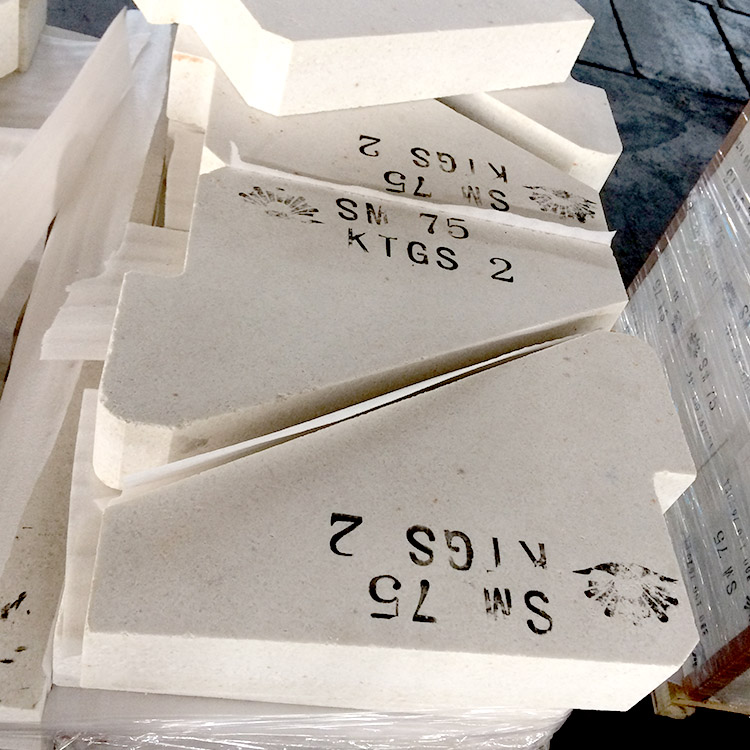
For manufacturers aiming to reduce scrap rates, improve consistency, and minimize downtime, choosing dense zircon blocks isn't just smart—it's essential. Whether you're running a small batch facility or a large-scale production line, this material delivers measurable ROI through extended service life and reduced operational risk.
Let your furnace run smoother, save more energy, and produce higher-quality glass—without constant worry about component failure.