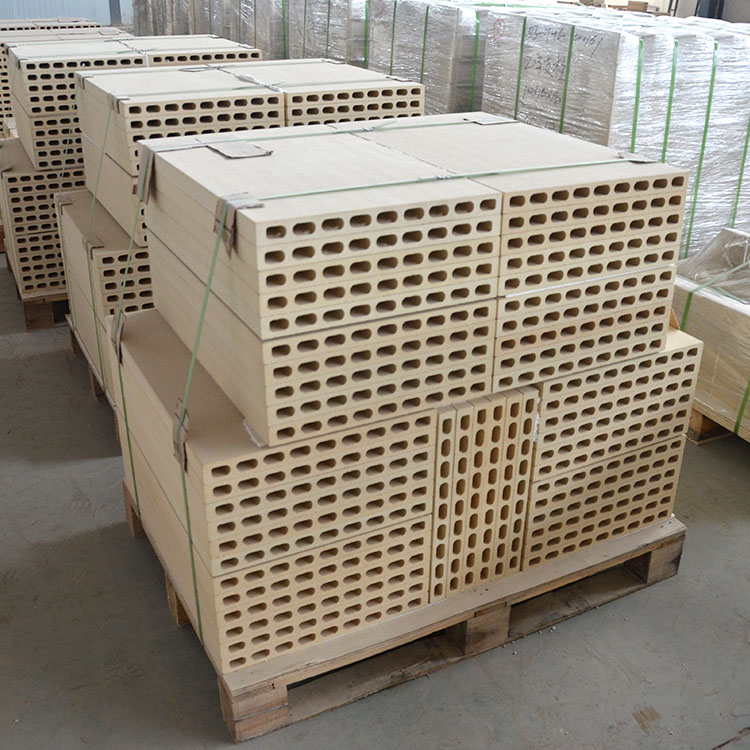
In the demanding environment of coke oven maintenance, the need to balance repair efficiency with operational continuity has long posed a significant challenge. Traditional refractory repair materials often require prolonged shutdowns, leading to costly production losses and compromised furnace longevity. Zero-expansion silica bricks, engineered specifically for coke oven hot repair, emerge as a high-performance solution that effectively addresses these industry pain points. This article delves into the technical merits and proven applications of zero-expansion silica bricks, illustrating how their unique properties can revolutionize repair protocols and enhance operational stability.
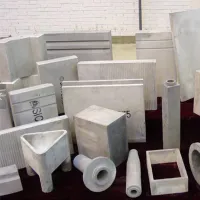
Zero-expansion silica bricks are distinguished by their ultra-low thermal expansion coefficient, typically less than 0.05% in the temperature range from room temperature up to 1600°C. This characteristic is critical in reducing thermal stress during rapid temperature fluctuations encountered in coke oven operations. The exceptional resistance to thermal shock, commonly documented withstanding over 20 cycles of quenching from 1400°C to ambient temperature without cracking, substantially lowers maintenance frequency.
The elevated silicon dioxide (SiO2) content, exceeding 96%, further enhances chemical inertness and structural stability under high-temperature corrosive atmospheres, which are typical in coke oven environments. In addition, the bricks exhibit a densely packed microstructure with porosity under 12%, improving mechanical strength with cold crushing strength frequently surpassing 100 MPa. These combined attributes enable a reliable, durable repair solution that maintains structural integrity during furnace hot repair processes.
Conventional refractory repair materials such as fireclay and alumina-based bricks often suffer from significant thermal expansion (typically 0.2-0.3%), leading to cracking, spalling, and early failure under cyclic heating conditions. They usually require a complete shutdown of operations to ensure proper curing and bonding, directly impacting production throughput and increasing operational costs.
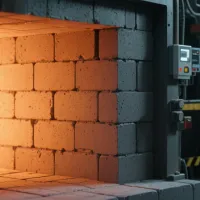
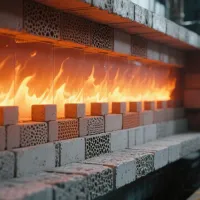
In contrast, zero-expansion silica bricks enable in-situ repairs with minimal or no furnace stoppage, thanks to their stable dimensional properties and superior bonding with the furnace lining. This translates into substantial reductions in downtime—often by up to 40-50% compared to traditional methods—accelerating maintenance workflows while safeguarding furnace performance.
A prominent coke chemical enterprise recently adopted zero-expansion silica bricks for its hot repair processes. Prior to implementation, maintenance cycles required furnace shutdowns averaging 10 hours per repair, interrupting production and incurring daily revenue losses estimated up to $30,000.
Post-adoption, repairs were conducted during furnace operation phases, leveraging the bricks’ robust heat resistance and minimal expansion. This in-place repair method curtailed downtime by nearly 50%—reducing average repair time to under 5 hours—resulting in annual maintenance cost savings exceeding $200,000. Additionally, the improved repair quality extended furnace lining service life by an estimated 15%, contributing to longer-term operational stability.
Successful utilization of zero-expansion silica bricks requires adherence to precise application protocols to maximize performance:
The adoption of zero-expansion silica bricks exemplifies technological progression that aligns with the industry’s imperative for sustainable, cost-effective furnace maintenance. By reducing unplanned shutdowns and repair frequencies, coke plants can increase output reliability and reduce the environmental footprint linked to frequent maintenance activities.
Furthermore, the material's intrinsic resistance to chemical corrosion mitigates the risk of furnace degradation caused by by-products like alkalis and slags, thereby underpinning long-term operational safety and efficiency.
How has your facility addressed the challenges of hot repair maintenance? Are zero-expansion silica bricks part of your solution toolkit? Share your insights or questions below to foster knowledge exchange among peers and refine best practices for sustainable coke oven operations.

 201
|
201
|
 high-temperature magnesium-chrome bricks
magnesite bricks
performance comparison
refractory materials
raw material specificity
excellent properties
key indicators
high-temperature magnesium-chrome bricks
magnesite bricks
performance comparison
refractory materials
raw material specificity
excellent properties
key indicators
 100
|
glass furnace silica brick
high purity silica brick
refractory comparison glass industry
silica brick performance
glass kiln耐火材料
100
|
glass furnace silica brick
high purity silica brick
refractory comparison glass industry
silica brick performance
glass kiln耐火材料
 259
|
high-density silicon brick
low-porosity refractory
coke oven longevity
refractory material innovation
thermal conductivity in silicon brick
259
|
high-density silicon brick
low-porosity refractory
coke oven longevity
refractory material innovation
thermal conductivity in silicon brick
.jpg?x-oss-process=image/resize,h_600,m_lfit/format,webp) 89
|
high density low porosity silicon bricks for coke oven efficiency
refractory materials for coke ovens
enhance service life of coke ovens with silicon bricks
89
|
high density low porosity silicon bricks for coke oven efficiency
refractory materials for coke ovens
enhance service life of coke ovens with silicon bricks
 73
|
Synthetic Magnesium Olivine Bricks
Cement Rotary Kiln Refractory Materials
Kiln Life Extension
Alkali Slag Corrosion Resistance
Eco-friendly Refractory Solutions
73
|
Synthetic Magnesium Olivine Bricks
Cement Rotary Kiln Refractory Materials
Kiln Life Extension
Alkali Slag Corrosion Resistance
Eco-friendly Refractory Solutions

.jpg?x-oss-process=image/resize,m_fill,h_200,w_200/format,webp)
.jpg?x-oss-process=image/resize,m_fill,h_200,w_200/format,webp)