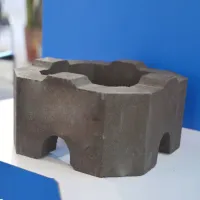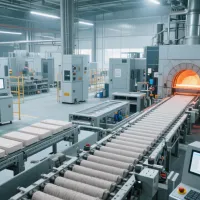
Industrial coke oven operations face relentless challenges from high-temperature wear and periodic maintenance shutdowns. Conventional hot repair techniques, requiring furnace downtime and expansion joint provisions, inevitably cause costly production halts and inconsistent repair quality. Zero-expansion silica bricks present a paradigm shift in hot repair technology. With their minimal thermal expansion, superior thermal shock resistance, and elevated SiO₂ purity, they empower maintenance teams to conduct effective repairs without interrupting furnace operation. This article explores the technical merits and practical advantages of zero-expansion silica bricks, revealing how they can boost efficiency, reduce costs, and reinforce operational safety in coke oven maintenance.
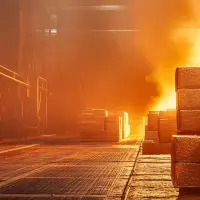
Coke ovens operate continuously under extreme thermal and chemical stress. Over time, refractory linings degrade, leading to hot spots, cracks, and reduced insulation integrity. Maintenance traditionally requires complete furnace shutdowns for repairs, often lasting days or weeks. This downtime translates to significant production losses — sometimes exceeding 20% of monthly output — and exposes operators to safety hazards in emergency repair situations. Additionally, conventional refractory materials necessitate generous expansion joints due to their inherent thermal expansion, complicating repair procedures and sometimes compromising lining durability.
The breakthrough of zero-expansion silica bricks lies in their engineered microstructure and chemical composition. With SiO₂ contents surpassing 98%, these bricks closely emulate fused quartz’s thermal behavior. Their thermal expansion coefficient is near zero — typically below 0.2 × 10⁻⁶ K⁻¹ up to 1200°C — markedly lower than conventional silica bricks, which range above 1.5 × 10⁻⁶ K⁻¹. This ultra-low expansion substantially mitigates stress buildup during rapid temperature fluctuations.
Additionally, the dense vitrified microstructure enhances mechanical strength and shields against slag and chemical erosion. The robust thermal shock resistance allows these bricks to withstand sudden cooling and reheating cycles without cracking, extending their service life in industrial furnace environments.
Unlike typical refractory materials requiring planned shutdowns and complex expansion joint layout, zero-expansion silica bricks facilitate in-situ repairs while the furnace remains operational. This innovation eliminates the need for pre-cut expansion joints, streamlines installation, and enhances repair uniformity and reliability. The operational flexibility dramatically improves maintenance turnaround times.
A major coke plant in northern China implemented zero-expansion silica bricks for their hot repairs over a six-month pilot period. The results were compelling:
The zero-expansion silica bricks’ strength and stability primarily derive from their fused quartz-based microstructure. The melting and controlled crystallization processes generate a continuous SiO₂ matrix with minimal impurities. This homogeneous structure resists volume changes triggered by thermal cycling, preventing crack initiation. Additionally, high density minimizes gas permeability, deterring aggressive slag infiltration and chemical corrosion, extending refractory lifespan in harsh operating conditions.

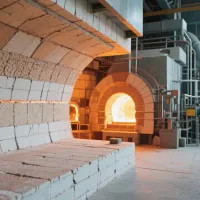
The versatility of zero-expansion silica bricks is not limited to coke ovens. Glass furnaces, metallurgical reactors, and other high-temperature kilns with stringent thermal shock demands can benefit substantially. Their ability to maintain dimensional stability during rapid heating and cooling cycles makes them suitable for various industrial repair and lining needs, promoting safer, more reliable furnace operation across multiple sectors.
What has been your experience with refractory materials in high-temperature industrial repairs? Share your insights or questions below to foster a collaborative exchange on advancing furnace maintenance technology.
 441
|
441
|
 magnesium bricks
high-temperature refractory materials
glass furnace regenerator
alkali slag corrosion resistance
production efficiency improvement
magnesium bricks
high-temperature refractory materials
glass furnace regenerator
alkali slag corrosion resistance
production efficiency improvement
 192
|
glass furnace silica bricks
high purity silica bricks
refractory material performance
glass production quality control
furnace lifespan extension
192
|
glass furnace silica bricks
high purity silica bricks
refractory material performance
glass production quality control
furnace lifespan extension
 49
|
high-density silicon brick
low-porosity refractory brick
coke oven耐火材料
silicon brick performance
coking efficiency improvement
49
|
high-density silicon brick
low-porosity refractory brick
coke oven耐火材料
silicon brick performance
coking efficiency improvement
.jpg?x-oss-process=image/resize,h_600,m_lfit/format,webp) 383
|
fused silica brick
high purity refractory material
low-alcaline borosilicate glass kiln brick
383
|
fused silica brick
high purity refractory material
low-alcaline borosilicate glass kiln brick
 190
|
Silicon Brick
Glass Industry
Expert Advice
Material Selection
190
|
Silicon Brick
Glass Industry
Expert Advice
Material Selection