In the competitive world of glass manufacturing, downtime equals lost revenue. Traditional furnace repair methods often require complete shutdowns—costing up to $50,000 per hour in lost production for mid-sized plants. But what if you could repair your glass melting chamber while it’s still running?
Zero-expansion silicon brick, made primarily from fused quartz (95%+ purity), offers unmatched performance under extreme thermal stress. Unlike conventional refractories that expand or crack during rapid heating cycles, this material maintains structural integrity at temperatures exceeding 1,600°C.
A leading flat glass manufacturer in Italy reported a 67% reduction in hot repair time after switching to zero-expansion silicon brick. Their team completed a critical lining patch on a 12-meter-wide furnace in just 8 hours—without interrupting production. The result? A net gain of 1,200 kg/day in output and a payback period of less than 9 months.
Another case study from a specialty glass plant in the U.S. showed an average increase in furnace lifespan from 4 years to 6.5 years post-implementation. Maintenance costs dropped by 28%, mainly due to fewer unplanned outages and reduced labor intensity during repairs.

These aren’t isolated wins—they reflect a fundamental shift in how modern glass producers approach maintenance. By enabling in-service repairs, zero-expansion silicon brick turns downtime into opportunity.
Many companies delay upgrading their refractory systems because they underestimate the long-term cost of inefficient hot repairs. On average, traditional methods lead to 3–5 unplanned shutdowns annually, each costing $25,000–$75,000 in direct losses plus indirect expenses like overtime and logistics.
With zero-expansion silicon brick, those risks vanish. You’re not just fixing a problem—you’re building resilience into your entire production chain.
Get a free technical consultation and receive a customized repair plan tailored to your furnace type and operating conditions.
Download Our Free Hot Repair Optimization Guide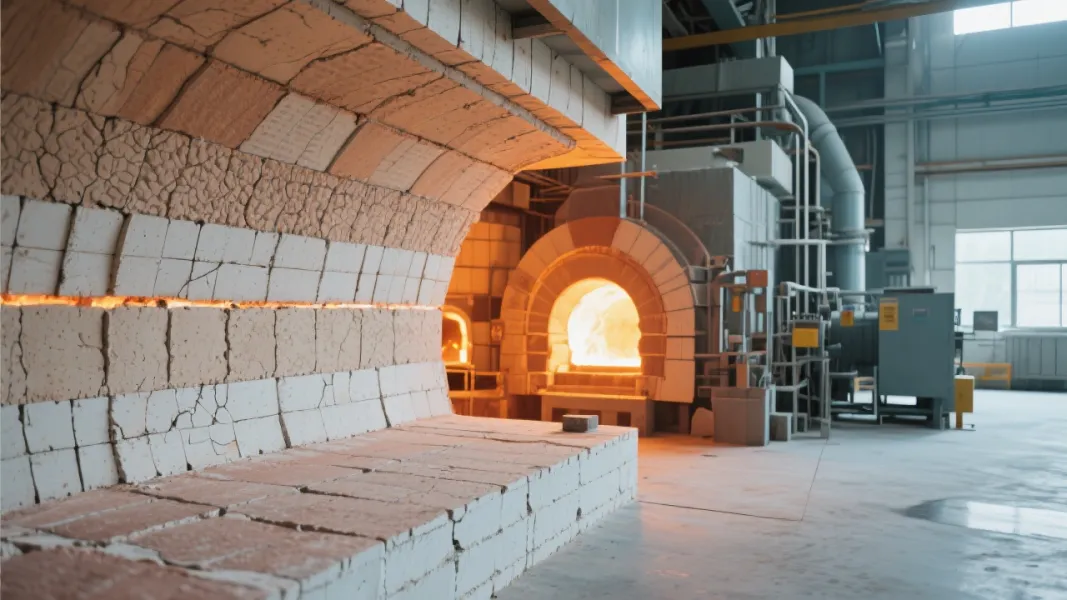
 121
|
121
|
 Magnesium - iron spinel bricks
Synthetic magnesium - iron - aluminum spinel bricks
Dry - process cement rotary kiln lining
Corrosion resistance
Kiln wall bonding performance
Magnesium - iron spinel bricks
Synthetic magnesium - iron - aluminum spinel bricks
Dry - process cement rotary kiln lining
Corrosion resistance
Kiln wall bonding performance
 247
|
fused silica brick
high purity corrosion-resistant silica brick
refractory brick for furnace roofs
247
|
fused silica brick
high purity corrosion-resistant silica brick
refractory brick for furnace roofs
 196
|
High-density low-porosity silica bricks
Coke oven refractories
Coke oven lifespan enhancement
Refractory brick performance
Silica brick density
196
|
High-density low-porosity silica bricks
Coke oven refractories
Coke oven lifespan enhancement
Refractory brick performance
Silica brick density
.jpg?x-oss-process=image/resize,h_600,m_lfit/format,webp) 272
|
high-density silica brick
low-porosity refractory materials
coke oven performance enhancement
132
|
fused silica bricks
advantages of fused silica bricks for kiln walls
low-alkali borosilicate glass compatible fused silica bricks
272
|
high-density silica brick
low-porosity refractory materials
coke oven performance enhancement
132
|
fused silica bricks
advantages of fused silica bricks for kiln walls
low-alkali borosilicate glass compatible fused silica bricks
.jpg?x-oss-process=image/resize,m_fill,h_200,w_200/format,webp)
.jpg?x-oss-process=image/resize,m_fill,h_200,w_200/format,webp)


.jpg?x-oss-process=image/resize,m_fill,h_200,w_200/format,webp)