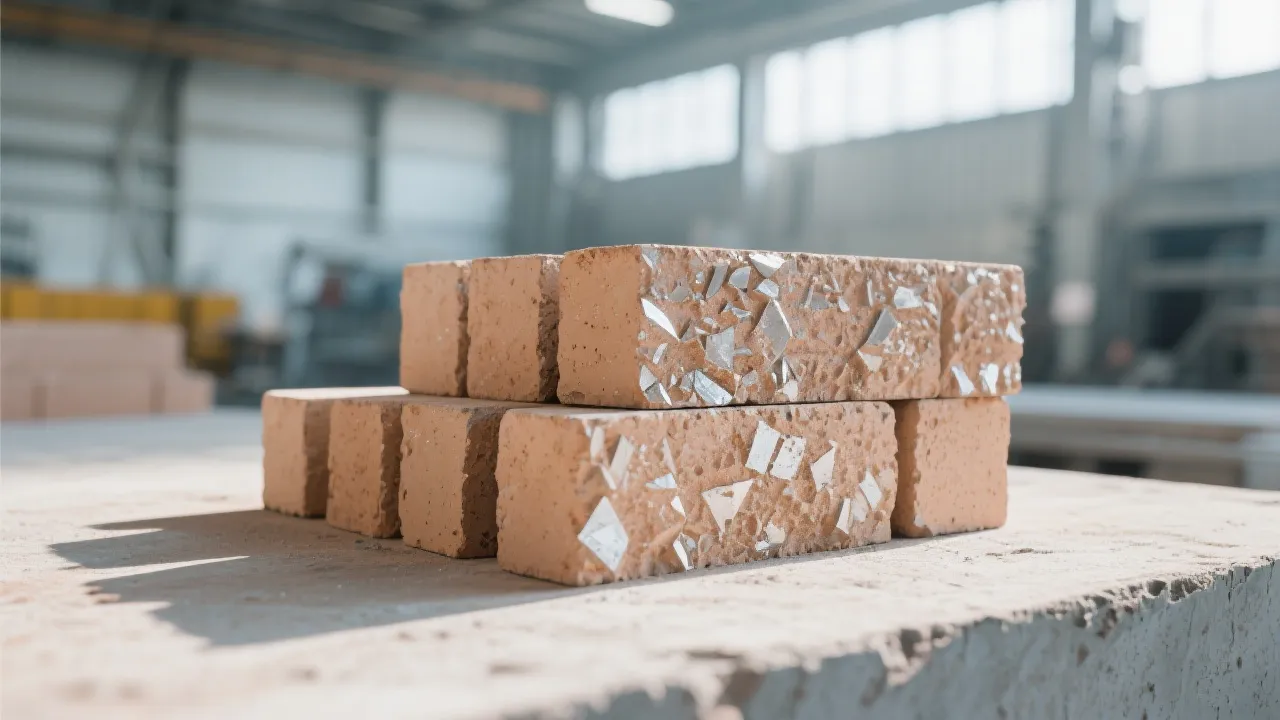
For glass manufacturers, unplanned furnace shutdowns are more than just operational disruptions—they’re profit killers. Traditional refractory materials often require frequent repairs, leading to lost production time, increased labor costs, and inconsistent product quality. But what if you could reduce repair frequency by up to 70% while extending your kiln’s lifespan by 3–5 years?
Most glass plants rely on conventional silicon bricks that expand during heating cycles—typically 0.5–1.2%. This necessitates expansion joints, complex installation, and constant monitoring. In practice, this means:
Our zero-expansion silicon brick, made from fused quartz with over 99% SiO₂ purity and a dense microstructure, maintains structural integrity even under extreme thermal shock. Key specs:
| Property | Conventional Silicon Brick | Zero-Expansion Silicon Brick |
|---|---|---|
| Max Expansion Rate | 0.8%–1.2% | ≤0.1% |
| Thermal Shock Resistance | Moderate (fails at ~300°C/min) | Excellent (up to 500°C/min) |
| Installation Time | High (requires expansion gaps) | Low (no gap needed) |
As one major Chinese float glass producer reported after switching: “We reduced annual hot repairs from 12 to just 4 times—and our furnace life extended from 7 to 11 years.” That’s not just cost savings—it’s strategic stability.
What truly sets zero-expansion silicon brick apart isn’t just the numbers—it’s how it transforms operations:
One U.S.-based manufacturer saw a 35% drop in labor hours spent on hot repairs within six months—and their energy consumption dropped 6% due to better heat retention.
Hot repair doesn't have to mean stoppage! With zero-expansion silicon brick, your kiln stays stable, your team stays productive, and your profits stay intact.

 87
|
87
|
 high density silica brick
low porosity refractory brick
coke oven耐火材料
silica brick performance metrics
refractory material selection guide
high density silica brick
low porosity refractory brick
coke oven耐火材料
silica brick performance metrics
refractory material selection guide
 166
|
Silica bricks for glass kilns
SiO₂ content in silica bricks
High - temperature resistant silica bricks
Glass kiln materials
Siliceous refractory materials
166
|
Silica bricks for glass kilns
SiO₂ content in silica bricks
High - temperature resistant silica bricks
Glass kiln materials
Siliceous refractory materials
 309
|
magnesia-alumina spinel bricks
high-temperature thermal shock refractory
refractory brick lifespan extension
high-temperature refractory solutions
erosion-resistant refractory materials
309
|
magnesia-alumina spinel bricks
high-temperature thermal shock refractory
refractory brick lifespan extension
high-temperature refractory solutions
erosion-resistant refractory materials
 251
|
magnesia bricks
high-temperature refractory applications
magnesia bricks vs refractory materials
251
|
magnesia bricks
high-temperature refractory applications
magnesia bricks vs refractory materials
 147
|
glass furnace silica bricks
high-purity silica bricks
refractory material performance
glass furnace maintenance cost
silica brick advantages
147
|
glass furnace silica bricks
high-purity silica bricks
refractory material performance
glass furnace maintenance cost
silica brick advantages


.jpg?x-oss-process=image/resize,m_fill,h_200,w_200/format,webp)